


A 1031 exchange is a great way to build wealth with the rental properties already in your real estate portfolio, as it allows you to defer paying capital gains taxes when you sell those properties and buy new ones. The key to success with this strategy is to thoroughly understand the 1031 exchange rules for real estate investors.
To help you, we’ve broken down the top seven rules you need to follow.
Quick Answer: What Are the 1031 Exchange Rules?
A 1031 exchange lets real estate investors sell investment property and defer paying capital gains taxes by purchasing a like-kind replacement property. To qualify, you must follow these 7 IRS rules:
- Rule 1: Like-Kind Property – The property being sold and the property being acquired must be similar, or like-kind real estate.
- Rule 2: Investment Property Only – 1031 exchanges are only applicable for investment or business property, not personal property.
- Rule 3: Equal or Greater Value – Replacement property must be worth the same or more than the property sold.
- Rule 4: No Boot – For the exchange to be completely tax-free, a taxpayer must not receive a “boot.” If they do receive a “boot,” it is subject to capital gains tax.
- Rule 5: Same Taxpayer – The tax return & the name appearing on the title of the property being sold must be the same as the tax return & title holder of the new property.
- Rule 6: 45-Day Identification Window – The property owner has 45 days to identify replacement property of like-kind, after closing on the relinquished property.
- Rule 7: 180-Day Purchase Window – The property owner must close on replacement property no later than 180 days after the closing of the relinquished property.
Key Benefit: Defer paying 100% of capital gains taxes plus depreciation recapture taxes when you follow all seven rules correctly.
Who Needs a 1031 Exchange? Investors selling appreciated rental properties who want to upgrade portfolios, increase cash flow, or relocate to better markets without paying 15-37% in capital gains taxes.
Real Example: Claudia & Julian Fraser exchanged 1 San Francisco property for 20 properties across three states, increasing monthly cash flow 6x while paying $0 in capital gains taxes.
If you need help connecting with a trusted 1031 exchange facilitator or need to find replacement properties fast, RealWealth can help. Join RealWealth today and get the resources and connections you need for a successful 1031 exchange.
Want a PDF of the seven rules? Download our free 1031 Exchange Rules list.
Jump to detailed rules breakdown | See success stories | Get expert help
What is a 1031 Exchange?
A 1031 Exchange, also known as a Starker Exchange or Like-Kind Exchange, is a powerful tax-deferred strategy utilized by some of the most financially successful real estate investors.
A 1031 exchange in real estate allows an investor to “defer” paying capital gains taxes on an investment property when it is sold, as long as another “like-kind property” is purchased with the profit gained by the sale of the first property.
Understanding the rules for 1031 exchange transactions is critical. Whether you’re a first-time investor or experienced real estate professional, following these 1031 exchange rules real estate investors must know will ensure your exchange qualifies for tax deferral.
What are the Benefits of 1031 Exchanges?
There are additional benefits to doing a 1031 exchange beyond simply saving on taxes, such as the ability to adjust your investment strategy. Learn how one investor used this strategy to double his portfolio.
These 1031 exchange benefits include:
- The ability to exchange high-maintenance properties for lower-maintenance properties without incurring a huge tax liability.
- The possibility of increasing your appreciation potential by exchanging high-priced properties in bubble markets, like Manhattan or San Francisco, for more affordable markets that are on the rise.
- The potential to get out of tenant-friendly markets and reinvest in areas where it’s easier to evict problem tenants and raise rents to market value when the unit goes vacant (ie, areas without strict rent control laws).
- And so much more!
How Do I Do a 1031 Exchange?
Traditionally, a 1031 exchange involves swapping one property for another of like-kind. However, the likelihood that the property you want is owned by someone who wants your property in return is unlikely. This is why the vast majority of 1031 exchanges are delayed exchanges, also known as three-party exchanges. In a delayed exchange, you need a middleman known as a Qualified Intermediary who holds onto the cash from the “sale” of your property and uses it to “buy” the replacement property for you.
Watch the 1031 Exchange Masterclass webinar to learn more.
1031 Exchange Rules for Real Estate Investors
To conduct a 1031 exchange successfully, you must follow the rules to the letter. If you fail to comply, you could be liable for paying capital gains tax, and no investor wants that.
The 7 Critical 1031 Real Estate Exchange Rules
Rule 1: Like-Kind Property
To qualify as a 1031 exchange, the property being sold and the property being acquired must be “like-kind.”
Like-Kind Property Definition: A like-kind property is a broad term that refers to both the original and replacement properties being of the same character or nature, even if they differ in quality or value.
In other words, you can’t exchange farming equipment for an apartment building because they’re not the same asset. In terms of real estate, you can exchange almost any type of property, as long as it’s not personal property.
For example:
- Exchanging an apartment building for a duplex would be allowed.
- Exchanging a single-family rental property for a commercial office building would be allowed
- Exchanging a rental property or vacation rental for a restaurant space would be allowed.
EXCEPTION: It’s important to note that the original and replacement properties must be within the U.S. to qualify under section 1031.
Learn how to identify high-cash-flow replacement properties that maximize monthly income.
Investor tip: Starker Exchanges can include more than two properties. For example, you can exchange one property for multiple replacement properties and vice versa: you can exchange multiple properties for one larger or more expensive property. As long as the new properties are like your original properties, you’re good to go.
Do yourself a favor and get a good, 1031 exchange qualified intermediary and replacement property specialist to assist you.
1031 Exchange Rule 2: Investment or Business Property Only
A 1031 exchange rules dictate that this strategy is only applicable for investment or business property, not personal property. In other words, you can’t swap one primary residence for another.
For example:
- If you moved from California to Georgia, you could not exchange your primary residence in California for another primary residence in Georgia.
- If you were to get married and move into the home of your partner, you could not exchange your current primary residence for a vacation property.
- If you were to own a single-family rental property in Idaho, you could exchange it for a commercial rental property in Texas.
Rule 3: Greater or Equal Value
In order to completely avoid paying any taxes upon the sale of your rental property, the IRS requires that the net market value and equity of the property purchased must be the same as, or greater than, the property sold. Otherwise, you will not be able to defer 100% of the tax.
For example, let’s say you have a property worth $2,000,000 and a mortgage of $500,000. To receive the full benefit of the 1031 exchange, the new property (or properties) you purchase need to have a net worth of at least $2 million, and you’ll have to carry over at least a $500,000 mortgage.
It’s essential to note that the $2,000,000+ value and $500,000 mortgage can be applied towards one apartment building or three different properties with a total value of $ 2,000,000 or more. Many investors exchange one expensive property for multiple properties in cash-flowing markets to dramatically increase their monthly income. (FYI: Acquisition costs, such as inspections and broker fees, also apply toward the total cost of the new property.)
Ed’s 1031 Exchange: Maryland to San Antonio
Rule 3 is easier to picture with real numbers. Ed sold his Cambridge, Maryland rental for $340,000 and needed a replacement worth at least that much to defer 100% of his gain. He exchanged into a $624,900 duplex in San Antonio, well above the threshold, and came out with more than just tax deferral.
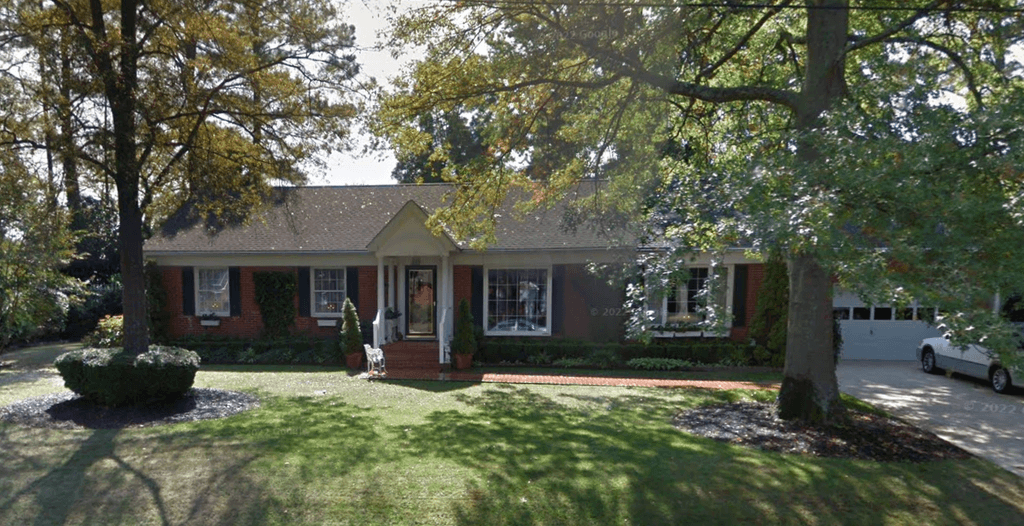
Before the exchange: Hands-on landlord, $2,000/year in cash flow, 1.2% ROE
After the exchange: Hands-off investor, $5,592/year in cash flow (a 2.8x increase), 3.6% ROE, with a 3.75% financing rate secured through RealWealth’s lender network
1031 Exchange Rule 4: Must Not Receive “Boot”
For the exchange to be completely tax-free, a taxpayer must not receive “boot.” Any boot received is taxable to the extent of the gain realized on the exchange. In other words, you can carry out a partial 1031 exchange, in which the new property is of lesser value, but this will not be 100% tax-free. The difference is called “boot,” which is the amount you will have to pay capital gains taxes on. This option is entirely acceptable and is often used when a seller wants to generate some income and is willing to pay taxes to do so.
An example of this would be if your original property is sold for $2,000,000 and the property you wish to exchange under Section 1031 is worth $1,500,000; in this case, you would need to pay the normal capital gains tax on the $500,000 “boot.”
Rule 5: Same Taxpayer
Another 1031 exchange rule is that the tax return and name appearing on the title of the property being sold must match the tax return and titleholder of the new property. However, an exception to this rule occurs in the case of a single-member limited liability company (“smllc”), which is considered a pass-through to the member. Therefore, the smllc may sell the original property, and that sole member may purchase the new property in their individual name.
For example, the single member of “Sally Jones LLC” is Sally Jones. The LLC can sell the property it owns, and because Sally Jones is the sole member of the LLC, she can purchase property in her name and remain compliant with the 1031 code.
1031 Exchange Rule 6: 45-Day Identification Window
The property owner has 45 calendar days after the closing of the first property to identify up to three potential properties of like-kind. This can be particularly challenging because the deals still need to make sense from a cash perspective, and depending on investment levels and current interest rates, this can be a difficult task.
Investor tip: The turnkey property teams in RealWealth’s network are vetted through our 7-step process and have ample inventory, making it easy to meet the 1031 exchange identification window timelines.
Rule 7: 180-Day Purchase Window
It’s necessary that the replacement property is received and the exchange completed no later than 180 days after the sale of the exchanged property, OR the due date of the income tax return (with extensions) for the tax year in which the relinquished property was sold, whichever is earlier. Understand the complete 8-step timeline with critical deadlines and best practices.
Download our free 1031 Exchange Rules Checklist to ensure you don’t miss any critical requirements.
Frequently Asked Questions About 1031 Exchange Rules
What are the most important 1031 real estate exchange rules?
While all 7 rules are critical, the 45-day identification window and 180-day purchase window are the most commonly violated because they’re time-sensitive with no exceptions or extensions.
The IRS does not grant deadline extensions for any reason—not for natural disasters, family emergencies, or financing delays. If you miss day 45 or day 180 by even one hour, your exchange fails and you owe capital gains taxes on the full amount.
Investor tip: Start identifying replacement properties 60-90 days BEFORE you sell your relinquished property. This gives you time to evaluate markets, run numbers, and have backup options ready. See our complete timeline guide with planning strategies.
How many rules for 1031 exchange transactions are there?
While there are seven core rules, successfully executing a 1031 exchange requires understanding dozens of nuances. This is why working with experienced professionals—a Qualified Intermediary, CPA, and investment counselor—is essential. Connect with RealWealth’s vetted 1031 professionals.
What happens if I violate a 1031 exchange rule?
If you violate any of the seven critical 1031 exchange rules, your exchange is immediately disqualified, and you will owe capital gains taxes on the full gain from your property sale. Here’s what that looks like:
- Example violation:
- You sell a rental property for $800,000 (bought for $400,000)
- You miss the 45-day identification deadline by 2 days
- Tax Consequences:
- Federal capital gains tax (20%): $80,000
- Depreciation recapture (25%): ~$50,000
- State taxes (varies): ~$40,000
- Total tax bill: ~$170,000
Common Violations:
- Touching the money – Receiving sale proceeds directly instead of through a Qualified Intermediary
- Missing deadlines – Failing to identify within 45 days or close within 180 days
- Personal use – Buying a property you intend to use personally or as a vacation home
- Trading down – Buying a replacement property worth less than what you sold
- Wrong taxpayer – Putting the new property in a different name or entity
Can violations be fixed? Generally, no. The IRS does not allow do-overs. This is why planning ahead and working with experienced professionals is critical.
Investor tip: Build in buffer time for both deadlines. Identify properties by day 30 (not day 44), and aim to close by day 150 (not day 179). This protects you from unexpected delays.
Can I exchange one property for multiple properties?
Yes! One of the most powerful strategies in 1031 real estate exchange rules is exchanging one property for multiple replacement properties—or vice versa. Real estate investors use this strategy to trade up for diversification, trade a high-equity property for multiple, or multiple for one, and to invest in multiple states for geographic diversification.
Learn how to identify 1031 exchange replacement properties that cash flow.
1031 Exchange Rules: A Recap
There are many 1031 exchange rules real estate investors must follow to qualify for tax deferral. These rules are strict, and qualification requirements must be met exactly. The most significant advantage of this strategy is that you can avoid paying capital gains tax on the sale of an investment property.
This can be a significant benefit for real estate investors who know which markets are poised for future growth. Ready to start looking at 1031 exchange replacement properties? Compare the top markets for 1031 exchanges.
1031 Exchange Success Story: From 1 Property to 20

How Claudia & Julian Fraser 6x Their Cash Flow with a 1031 Exchange
The Challenge: Trapped by High Property Values
Claudia and Julian owned a rental property in San Francisco worth approximately $1.5 million. Like many Bay Area investors, they faced an impossible choice:
“We knew we wanted to sell it,” Claudia recalls. “However, if we were to sell it, we would have to pay a substantial capital gains tax. So, we knew we had to do a 1031 exchange. Do you have any idea how many rules there are? There’s a ton.”
Finding RealWealth
“That’s when we heard Kathy Fettke on the radio, and what she was saying sounded too good to be true. It really did.”
Their Initial Reaction:
“We were very cautious when we first found RealWealth, so we took our time. But eventually, we trusted them.”
The transformation: From Skeptics to Believers
What Changed Their Mind:
“Their whole ideology is about teaching you how to be a great investor, and it really works. I mean, I’ve learned so much more in the last year or so than I ever knew about rental property before.”
The Strategy: Going Where Money Works Harder
The Old Myth: You have to live near your rentals.
The New Reality: With technology, the internet, and a trustworthy team, this is no longer necessarily true.
“It was amazing how much further our money went outside of the Bay Area.”
The Results: 1 Property Becomes 20
Before the 1031 Exchange:
After the 1031 Exchange:
The Bottom Line:
“We sold the one property in the Bay Area and we turned around and invested in about 20 properties, increasing our cash flow six times.”
— Claudia & Julian Fraser
Would you like to hear about more experiences? Learn how former RealWealth Investment Counselor Joe Torre used this strategy to double his portfolio and how two other investors increased their cash flow.
Need help Finding replacement properties fast?
Join RealWealth (it’s free!) for expert guidance and access to all our 1031 Exchange resources.
More About 1031 Exchanges (Video)
Your Next Steps
This article provides an overview of the 1301 exchange rules and the basics for using this strategy successfully. Hopefully, you now understand the intricacies of this method.
If you are new to real estate investing, start by learning about the best places to buy rental property and how RealWealth stands out with its 7-step vetting process for turnkey property teams, who must all meet our REAL Income Property Standards™.
For experienced investors, take the time to gain a solid understanding of 1031 exchange rules and regulations. You’ll need to know them like the back of your hand, or you still might end up with a huge tax bill.
Truth be told, a 1031 exchange tax-deferment is incredibly complicated, even if you’re a career investor. A small mistake can jeopardize the deferment of your capital gains taxes. This is why most investors seek professional help. To help you stay on track, download our free 1031 Exchange Rules Checklist to reference while you plan your exchange.
How Can RealWealth Help You Find 1031 Exchange Replacement Properties?
You don’t have to go through the 1031 exchange process alone. RealWealth investors get:
Becoming an investor at RealWealth is 100% free, and once you’ve joined, you can schedule a complimentary strategy session with your investment counselor and start viewing sample properties. Join RealWealth today!


