

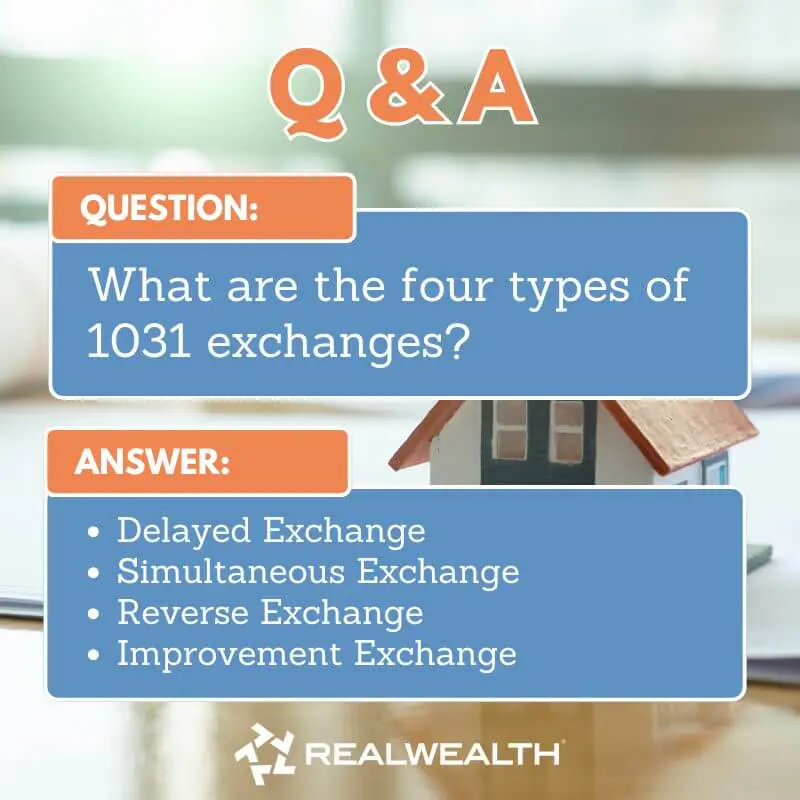
Did you know that investors can choose from four main types of 1031 exchanges? These include simultaneous, delayed, reverse, and construction or improvement exchanges. Understanding these different types of tax-deferred structures is essential for any investor considering a 1031 exchange strategy to defer capital gains taxes. Below, we break down these exchange types and why an investor may decide to use them.
Quick Answer: What Are the 4 Types of 1031 Exchanges?
The four types of 1031 exchanges are: Delayed Exchange (most common), Simultaneous Exchange, Reverse Exchange, and Construction/Improvement Exchange. Each type has different timelines and requirements depending on whether you buy before or after selling your property.
What is the most common type of 1031 exchange?
The Delayed Exchange accounts for over 90% of all 1031 exchanges because it gives investors 45 days to identify and 180 days to close on replacement properties.
What’s the main difference between types?
The primary difference is timing:
- Delayed: Sell first, buy later (45/180-day timeline)
- Simultaneous: Buy and sell on the same day
- Reverse: Buy first, sell later (all-cash required)
- Construction: Use exchange funds to improve replacement property
Which type should you choose?
Most investors use delayed exchanges for flexibility. Choose reverse if you found your dream property first. Use construction exchanges when the replacement property needs improvements.
Need help choosing the right exchange type? Connect with a vetted Qualified Intermediary and find replacement properties available now →
What are the Four Different Types of 1031 Exchange Structures?
Quick View: 1031 Exchange Type Descriptions
| 1031 Exchange Type | Description |
|---|---|
| Delayed 1031 Exchange | A delayed 1031 exchange occurs when the original property is relinquished before purchasing a replacement property, and it is the most common type of exchange. |
| Simultaneous 1031 Exchange | A simultaneous 1031 exchange occurs when the replacement property and relinquished property close on the same day. |
| Reverse 1031 Exchange | A reverse 1031 exchange occurs when a replacement property is purchased first, and the existing property is sold after. |
| Construction 1031 Exchange | A 1031 construction exchange allows taxpayers to make improvements on a replacement property by using the exchange equity. |
1. Delayed 1031 Exchange
The Most Common 1031 Exchange Type
The delayed like-kind exchange is the most common type of 1031 exchange chosen by investors today. This type of 1031 exchange occurs when the Exchangor relinquishes the original property before acquiring the replacement property.
In other words, the property the Exchangor owns (which is called the “relinquished” property) is transferred first, and the property the Exchangor wishes to exchange it for (the “replacement” property) is acquired second.
The Exchangor is responsible for marketing their property, securing a buyer, and executing a sale and purchase agreement before initiating the delayed exchange. Once this has occurred, the Exchangor must hire a third-party exchange intermediary, also called a qualified intermediary (QI), to begin the sale of the relinquished property and hold the proceeds from the sale in a binding trust for up to 180 days while the seller acquires a like-kind property.
Investor tip: Choosing the right qualified intermediary is crucial for a successful delayed exchange, as they’ll handle all funds and ensure IRS compliance. Unfortunately, the industry is poorly regulated. So if you choose an exchange facilitator on your own, be sure to vet them thoroughly. If you’d like to save time, let us introduce you to the trusted 1031 exchange facilitator we’ve recommended for over a decade. We even use them on our own 1031 exchanges!
Using this strategy, an investor has a maximum of 45 days to identify the replacement property and 180 days to complete the sale of their property. In addition to the numerous tax benefits, this extended timeframe is one of the reasons that the delayed exchange is so popular.
Learn more about the specific 1031 exchange timeline and deadlines you’ll need to follow for a delayed exchange.
2. Simultaneous 1031 Exchange
The second type of 1031 exchange is called a simultaneous exchange. This type of exchange occurs when the replacement property and relinquished property close on the same day. As the name suggests, these closings occur simultaneously.
It is important to note that the exchange must occur simultaneously; any delay, even a short one, caused by wiring funds to an escrow company, can result in disqualification of the exchange and the immediate application of full taxes.
There are three primary ways that a simultaneous exchange can occur.
- Swap or complete a two-party trade, whereby the two parties exchange or “swap” deeds.
- A three-party exchange in which an “accommodating party” facilitates the transaction simultaneously for the exchanger.
- Simultaneous exchange with a qualified intermediary who structures the entire exchange.
Working with an experienced 1031 exchange facilitator ensures proper timing and compliance, as even minor delays can disqualify the exchange and trigger immediate tax liability.
3. Reverse 1031 Exchange
A reverse 1031 exchange, also known as a forward exchange, occurs when you acquire a replacement property through an exchange accommodation titleholder before you exchange the property you currently own. In theory, this type of exchange is very simple: you buy first and you exchange later.
What makes reverse exchanges tricky is that they require all cash. Additionally, many banks won’t offer loans for reverse exchanges. Taxpayers must also decide which of their investment properties will be acquired and which will be “parked.” Failure to close on the relinquished property during the established 180-day period that the acquired property is parked will result in a forfeiture of the exchange.
This type of 1031 exchange follows many of the same rules as the delayed exchange. However, there are a few key differences to note:
- Taxpayers have 45 days to identify what property is going to be sold as “the relinquished property.”
- After the initial 45 days, taxpayers have 135 days to complete the sale of the identified property and close out the reverse 1031 exchange with the purchase of the replacement property
4. Construction or Improvement 1031 Exchange
The final type of 1031 exchange we will highlight is the construction exchange. This type of exchange allows taxpayers to make improvements on the replacement property using the exchange equity. In layman’s terms, the taxpayer can use their tax-deferred dollars to enhance the replacement property while it is placed in the hands of a qualified intermediary for the remainder of the 180-day period. When identifying replacement properties, consider which ones might benefit from improvements to increase value or cash flow.
It is important to note that the taxpayer must also meet three requirements if they want to defer all of the gains (from the sale of the relinquished property) and instead use it as part of the construction or improvement exchange.
- The entire exchange equity must be spent on completed improvements or as a down payment by the 180th day.
- The taxpayer must receive “substantially the same property” that they identified by the 45th day.
- The replacement property must be equal to or greater in value when it is deeded back to the taxpayer. Improvements must be made before the taxpayer can take the title back from the qualified intermediary.
How to Choose the Right Type of 1031 Exchange
For help understanding all the 1031 exchange rules that apply to each exchange type, consult with your tax advisor and Qualified Intermediary before beginning the process. Here are some basics to help you understand which type of 1031 exchange might be right for your situation.
Choose a Delayed 1031 Exchange if:
- You want maximum flexibility with 45/180-day windows
- You need time to research and identify replacement properties
- You’re exchanging from one property to multiple properties
- You want to boost cash flow by diversifying into multiple markets
Choose a Simultaneous 1031 Exchange if:
- You’ve already found your ideal replacement property
- Both parties are ready to close immediately
- You want to minimize holding period and risks
Choose a Reverse 1031 Exchange if:
- You found your dream property and must act fast
- You have all-cash available to purchase first
- You’re in a competitive market where properties sell quickly
Choose a Construction/Improvement 1031 Exchange if:
- The replacement property needs renovations or improvements
- You want to use tax-deferred dollars for construction
- You can complete improvements within the 180-day window
Quick View: 1031 Exchange Types & Differences
| 1031 Exchange Type | Timeline | Best For | Complexity | Cash Required |
|---|---|---|---|---|
| Delayed | 45 days to identify, 180 days to close | Most investors, first-time exchangers | Low | No |
| Simultaneous | Same-day closing | When replacement property is already secured | Medium | No |
| Reverse | Buy first, 180 days to sell | Competitive markets, must act fast | High | Yes (all cash) |
| Construction | 180 days for improvements | Properties needing renovations | High | No |
Need Help With A 1031 Exchange?
Join RealWealth and get access to our list of 1031 exchange facilitators and connect with turnkey property teams selling single family and multi-family turnkey investment properties, with property management in place, in top U.S. markets.


