


Thinking about doing a 1031 exchange from California to another state? You’re not alone. Thousands of California landlords are exchanging high-priced, low-cash-flow properties for multiple rental properties in landlord-friendly states—often tripling or quadrupling their passive monthly income in the process.
Understanding how to create passive income through real estate investing and becoming job optional was one of the first things that stood out to me when I started working for RealWealth, which has centered its company culture on building a life of real wealth. I remember watching a success story that RealWealth investors Claudia and Julian recorded.
They did a 1031 exchange from California to another state and it paid off big time. They were able to exchange one San Francisco rental property for 20 rental properties in three states, all of which had property management in place.
In doing so, they were able to increase their cash flow six times, bringing in over $15,000 in purely passive income!
Imagine having $15,000 a month in your bank account for doing absolutely nothing. That would be pretty nice, right?
If you own rental property in California that isn’t producing enough cash flow, this could potentially happen to you, too. Because the truth is, money goes so much further outside of California. Understanding how to do a 1031 exchange and working with a qualified intermediary can help you make this transition successfully.
In markets like Jacksonville, for example, you can purchase a rental property for around $200,000 that’ll generate over $1,000 in passive income every month if you pay in cash.
If that’s not incentive enough, continue reading below to learn about the variety of other benefits to 1031 exchanging your California rental property for turnkey rental properties in other states.
Quick Answer: Can You Do a 1031 Exchange from California to Another State?
Yes, you can do a 1031 exchange from California to another state. There are no special IRS restrictions on exchanging California property for out-of-state replacement properties. However, California requires you to file Form FTB 3840 annually to track deferred gains, even after you move out of state.
Is it a good idea?
For many California landlords, exchanging to another state can significantly increase cash flow. For example, a $1 million California property might exchange for 3-5 rental properties in landlord-friendly states, potentially 3-6x higher monthly income.
What should you know before exchanging?
- Follow standard 1031 rules: 45 days to identify, 180 days to close
- California tracks your gain: File FTB 3840 annually until the property is sold or donated
- Choose landlord-friendly states: Look for states without rent control and easier eviction processes
- Tax advantages: No California exit tax, but the state will recoup deferred gains on eventual sale
Top cities California investors exchange to:
Jacksonville/Ocala, Dallas-Fort Worth, Oklahoma City, Birmingham, and Atlanta offer higher cash flow, lower property taxes, and landlord-friendly laws.
Ready to find cash-flowing replacement properties outside California? Join RealWealth to talk with an investment counselor and find the best market for you →
Why California Landlords Are Doing 1031 Exchanges to Other States
California is hard on landlords. I know this firsthand because my family owns 130 units in the Los Angeles area and self-manages them. While it makes sense for us to stay in California financially (for now), there are many hoops to jump through. So many that my husband, who is the company’s general counsel, often works every day of the week. You can imagine how happy this makes me ;).
Here are a few of the greatest difficulties of being a California landlord, which may be enough of a hindrance to make you consider exchanging your California property for properties in another state:
- Most properties in California are under some form of rent control
- It’s incredibly difficult to evict problem tenants
- A lot of people are leaving California, which raises the question of whether the demand for rental properties will decrease in the coming years
You may also like: How To Identify 1031 Exchange Replacement Properties To Boost Cash Flow
Reason #1: California Has Rent Control
One of the most significant issues California landlords face is rent control. While this isn’t necessarily a deal-breaker for all California landlords, it can make life difficult for those who own four to six-unit properties. These types of properties, along with single-family homes owned by LLCs, real estate trusts, or corporations, are not exempt from rent control, and their size makes it difficult for them to cash flow if they can raise rents at most 5% per year (depending on the city and county).
Owning your single-family investment property personally, rather than in an LLC, real estate trust, or corporation, would solve the “rent control problem,” however, doing that would create a whole new host of problems since you and your bank account would be personally liable for anything that occurs at the property.
Understanding how to identify replacement properties that cash flow is essential when moving from rent-controlled California markets to landlord-friendly states.
Reason #2: California Makes It Incredibly Hard To Evict Problem Tenants
One of the most challenging parts of having a landlord husband is hearing about all the problem tenants he can’t evict. Like the man who refuses to wear a mask (even though the city mandates it due to COVID) in the common areas and throws his cigarette butts in the planters out front. Or the guy who lets his Golden Retriever (an Emotional Support Animal according to an internet doctor) run around the property without a leash, defecating in the hallways.
Reason #3: People are Leaving California for More Affordable States
It’s not hard to understand why so many people are leaving California. It’s expensive here, which makes it almost impossible for the typical person to afford to rent a nice apartment in a good part of town (let alone buy a home). So, people are leaving for states like Texas, Florida, and Oklahoma.
And it’s likely this trend will only continue as more people work from home post-COVID. For those who are now only tied to a laptop instead of a desktop computer in a cubicle in a San Francisco or Los Angeles office building, moving may sound really nice.
Investor tip: When choosing replacement properties, focus on markets with strong population growth, job creation, and landlord-friendly regulations to maximize your investment returns.
1031 Exchange Rules When Exchanging California Property for Out-of-State Property
According to Joe Torre, a former RealWealth Investment Counselor, there are no specific 1031 exchange rules to follow when exchanging from California to another state, beyond the standard IRS requirements. However, you’ll need to work with a qualified intermediary and follow the critical 1031 exchange timeline: 45 days to identify replacement properties and 180 days to close. Keep in mind that the QI industry isn’t federally regulated, so who holds your funds during a multi-state exchange matters even more. RealWealth investors work with the same reputable facilitator we’ve relied on for over a decade, rather than vetting an unfamiliar QI while also coordinating a move across state lines.
Learn more about the general rules: 1031 Exchange Rules, Tips & Strategies for Success in Real Estate
Important Considerations When Doing a 1031 Exchange from California to Another State
California’s Tax Tracking Requirements
One thing to note when exchanging California property for another state is that California “aggressively tracks” the ultimate sale of a replacement property. When you eventually sell, they want to recoup the gains. This is true even if you no longer live in California. For the state to track you, they require that you complete form FTB 3840 in the year you initiate the exchange and every year thereafter.
According to the California Franchise Tax Board, you must continue to file FTB 3840:
- “As long as you defer the gain or loss
- If you exchange the out-of-state replacement property with another out-of-state property as part of another exchange
- Until you report and pay tax to California on your deferred gain or loss
- Until the owner of the replacement property dies, eliminating the deferred California source gain or loss
- Until you donate the replacement property to a non-profit organization”
Be sure to keep these requirements in mind if you choose to do a 1031 exchange from California to another state.
Strategies to Minimize California Tax Liability
As an investor, you need to keep this in mind if you choose to exchange California property for property in another state. A good rule of thumb is to try and never sell your replacement properties, but just continue doing 1031 exchanges and eventually leave your assets to your children or donate them to charity.
This “buy and hold forever” strategy is commonly used by successful real estate investors who want to:
- Defer capital gains indefinitely through successive 1031 exchanges
- Pass properties to heirs with a stepped-up basis (eliminating deferred gains)
- Build generational wealth through real estate
Working with the Right Team
To ensure a successful 1031 exchange from California to another state, you’ll need:
- A qualified intermediary experienced with multi-state exchanges
- A tax advisor familiar with California’s FTB 3840 filing requirements
- A turnkey property team selling quality properties that meet our REAL Income Property Standards™
- Local property management already in place that has met our 7-step vetting process
- An investment counselor who can help you identify cash-flowing replacement properties within your 45-day deadline
Quick View: California vs. Out-of-State Investment Property
| Factor | California | Landlord-friendly states (FL, TX, OK, AL, GA) |
|---|---|---|
| Average Property Price | $700K – $1.5M+ | $150K – $432K |
| Cash on Cash Returns | -3% | 4-10% |
| Rent Control | Yes (most areas) | No |
| Eviction Process | 60-90+ days, very difficult | 30-45 days, straightforward |
| Property Tax Rate | 0.76% (plus special assessments) | 0.35% – 1.8% |
| State Income Tax | 13.3% (highest bracket) | 0% (TX, FL) |
| Landlord Laws | Tenant-friendly | Landlord-friendly |
Best States for California 1031 Exchanges
When exchanging California property for out-of-state rental properties, these states consistently offer the best combination of cash flow, appreciation potential, and landlord-friendly laws:
Florida
- No state income tax
- Strong population growth (especially from California)
- No rent control
- Average property price: $200K-$350K
- Top markets: Jacksonville, Cape Coral, Ocala
Texas
- No state income tax
- Business-friendly environment
- Landlord-friendly eviction laws
- Average property price: $180K-$320K
- Top markets: Dallas-Fort Worth, Houston, San Antonio
Oklahoma
- Strong appreciation, up 82% since 2014
- Moderate property taxes (~1.2%, lower than Cleveland or Indianapolis)
- Landlord-friendly eviction laws
- Average property price: $210K–$432K (single-family to duplex)
- Top markets: Oklahoma City, Lawton, Yukon, Guthrie
Alabama
- Extremely low property taxes (0.35% – the second lowest in the US!)
- Affordable housing market
- Strong landlord protections
- Average property price: $150K-$250K
- Top markets: Birmingham, Huntsville, Tuscaloosa
Georgia
- Business-friendly environment
- Strong job growth
- Affordable housing prices
- Average property price: $180K-$280K
- Top markets: Atlanta, Augusta, Columbus
Ann’s 1031 Exchange Success Story
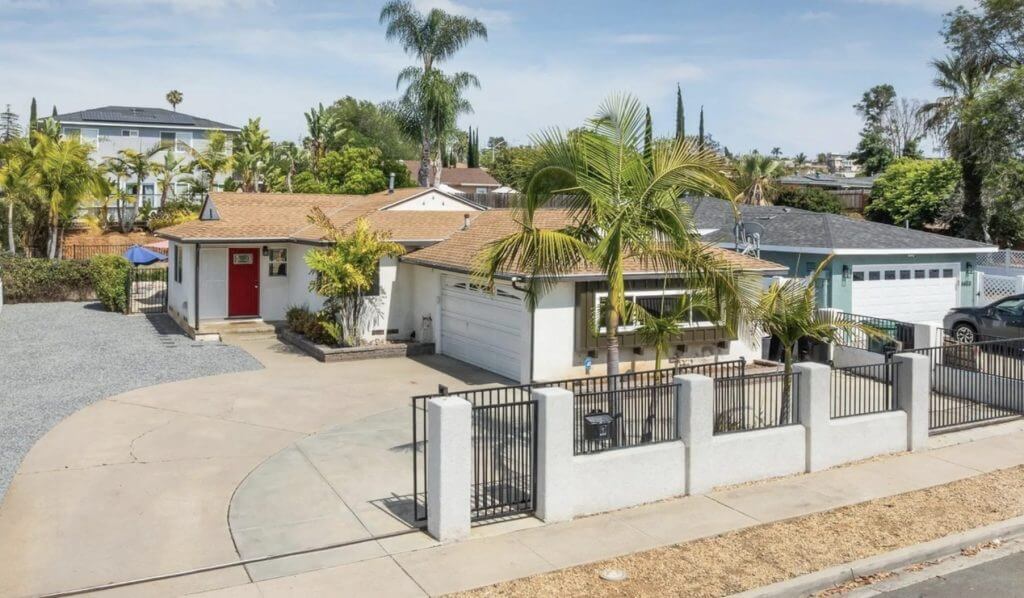
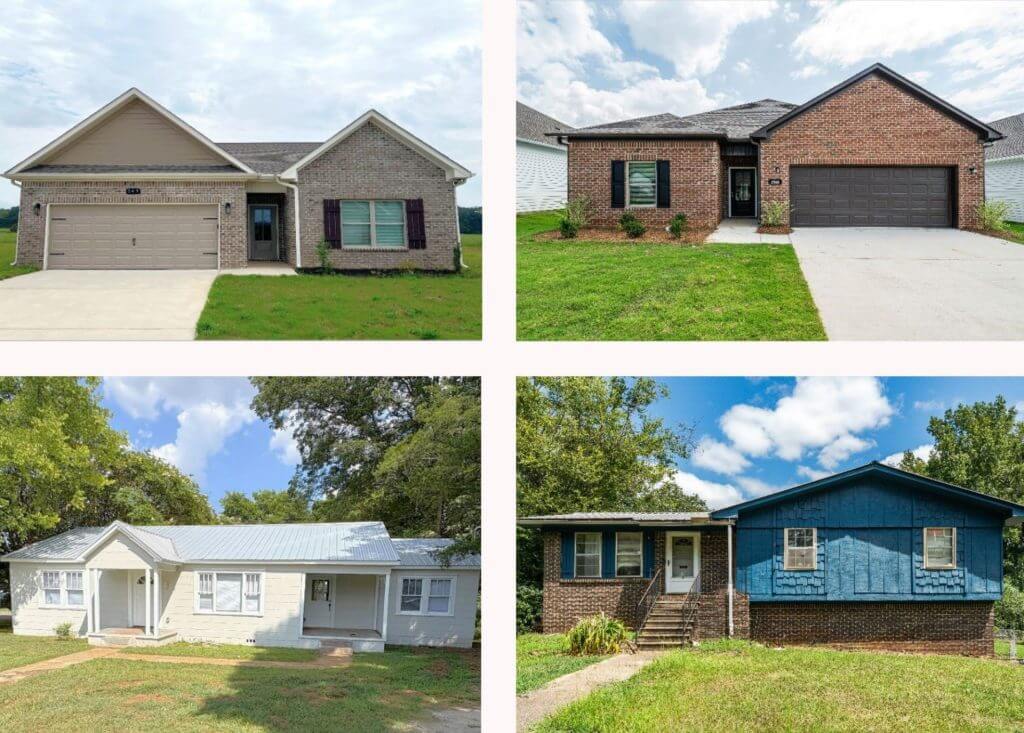
Turning One Short-Term CA Rental Into 5 Rental Properties in AL
We recently helped our investor, Ann, upgrade her real estate portfolio through a 1031 exchange from California to another state. From one short-term rental, with negative cash flow and declining revenue, she purchased four investment properties across diverse cities in Alabama. All properties have property management in place, and she is cash-flow positive!
1031 Exchange: San Diego, CA → Alabama
- Real data: Sold $930K STR in San Diego (negative cash flow)
- Bought four properties across Alabama for $957,900
- Went from NEGATIVE cash flow to $29,483/year positive
- 9.8% return on equity
- Diversified across 4 Alabama cities (Huntsville, New Market, Birmingham, Bessemer)
Read more 1031 exchange success stories.
Need help Finding replacement properties fast?
Join RealWealth (it’s free!) for expert guidance and access to all our 1031 Exchange resources.
Need Help Finding Cash Flowing Replacement Properties in Another State?
We can help! Along with free real estate investing education, RealWealth investors get:
Join 90,000+ registered investors today for free!


