Mortgage payments, property taxes, and property management fees are typically very predictable rental property expenses, making it easy for real estate investors to plan and budget accordingly. Most property owners would likely include insurance in that same category of “predictable expenses,” but the ever-evolving insurance market tells a different story.
With the severity and frequency of climate events resulting in carriers exiting from the market, it’s more important than ever for real estate investors to understand the factors that impact insurance premiums and what they can do to manage those costs without sacrificing essential protections.
How Insurance Is Different from Other Rental Property Expenses
Most rental property expenses are fairly predictable:
- Principal & Interest – fixed-rate loans provide predictable monthly payments
- Property Management – typically charged as a percentage of the rent (generally 8-10%)
- Property Taxes – increases are gradual and are typically anticipated in pro formas
Insurance costs, however, can spike significantly year over year on short notice. Unlike the other expenses listed above, insurance premiums are heavily influenced by external factors beyond an investor’s control, such as severe weather or inflation. The unpredictable nature of insurance can have a huge impact on cash flow and investment returns.
For example, just a few years ago, many real estate investors faced double-digit percentage price hikes with general rate increases and Insurance to Value (ITV) minimum increases as a result of large-scale wildfires and hurricanes.
What Factors Drive Insurance Cost Increases for Rental Properties?
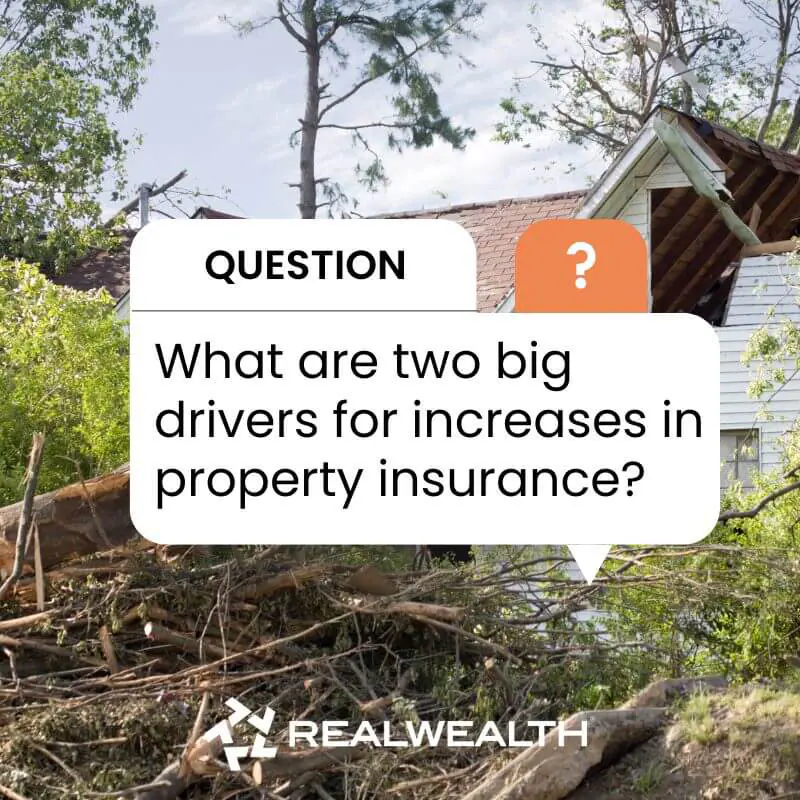
There are many reasons why insurance costs may increase, but two of the biggest drivers tend to be extreme weather events and inflation.
Catastrophic Weather
While it is still unclear whether or not the frequency of climate events is increasing, many weather outlets confirm that the severity and speed at which hurricanes, tornadoes, wildfires, and floods intensify are climbing. As a result, damage from these events is more widespread, leading to more property losses. Of course, more losses mean more insurance claims, and more money insurers must pay out.
Overall, the weather in the United States has become more volatile, and the insurance market has struggled to keep up. When the severity of natural disasters increases, both the number and cost of property claims rise. To remain profitable, insurance carriers must raise premium prices, or, in some cases, stop writing business in certain areas altogether so they can remain viable in other parts of the country.
Inflation
In recent years, both building materials and labor have become more expensive, which means it costs more to repair or rebuild properties after a loss. So, insurance providers must account for higher expenses when setting their premium prices. Insurance carriers, like every other business, have employees and operating expenses that factor into how they evaluate risk and price coverage. The reality is that the insurance market is far from immune to inflation.
Construction costs surged in 2020 as a result of supply chain disruptions and skilled labor shortages, and those pressures have still not fully eased. Contractors continue to struggle to find and retain qualified workers, forcing skilled trade companies to charge more for labor, creating a ripple effect. When it’s more difficult to get contractors out quickly, repairs take longer. When repairs take longer, damage can worsen. And when damage worsens, it takes more money to make repairs. If carriers are often paying significantly more than anticipated to complete repairs, the cost to settle claims rises, so insurers must adjust pricing to keep up.
How Real Estate Investors Can Manage Rising Insurance Costs
As discussed above, insurance costs are largely driven by factors outside of your control as an investor. When premiums rise, they typically increase across all insurance carriers because catastrophic weather and inflation impact the entire market. So, while there’s not much you can do to influence the price of your insurance, you can make strategic decisions that positively affect a property’s insurability.
Market Selection Strategies
- Choose investment markets with lower natural disaster risk profiles
- Diversify your rental portfolio across different geographic regions
- Analyze insurance cost trends when evaluating new investment markets
- Compare insurance costs as a percentage of gross rents across markets
Property-Level Investment Strategies
- Target newer construction (2010+) investment properties built to current codes with updated roofs, wind mitigation features, etc., for lower premiums, especially in areas susceptible to severe weather
- Improve security and fire safety measures for savings of up to 25%
- Verify turnkey property providers include realistic insurance costs in pro formas
- Review C.L.U.E. reports for potential red flags
- Factor in 10-15% annual insurance increases in cash flow projections
- Consider how insurance costs will affect cash-on-cash returns
Financial Planning Approaches
- Build insurance premium increases into investment underwriting models
- Maintain reserve funds across the portfolio for unexpected insurance spikes
- Consider higher deductibles to lower premiums
- Bundle policies for multi-property investor savings of 5-30%
- Work with an independent insurance agent specializing in REI properties
- Reduce claim frequency and support stable premium rates by requiring Renters Insurance
Learn about additional property insurance cost-saving strategies here.
Questions Turnkey Investors Should Always Ask
Investors must do their due diligence for any property they are considering purchasing. Ask the following questions to evaluate a property’s potential ROI, risk, and long-term insurance considerations.
Turnkey Provider or Seller
- What’s the average price/insurance cost trend for this property over the past 3 years?
- What percentage of gross rents typically goes to insurance?
- When was the last time significant renovations or code upgrades were made?
Property Managers
- Is the investment property located in a flood or high-wind zone?
- Are there mitigation features (roof type, window type, security, fire safety) that reduce the likelihood of major loss?
- Does the lease require tenants to carry Renters Insurance, and is it enforced?
Insurance Provider
- Do your policies account for landlord-specific risks and various occupancy statuses (vacant, tenant-occupied, under renovation)?
- Do you offer endorsements or add-ons to protect against tenant-related damage?
- Are there coverage limits or exclusions for natural disasters (hurricanes, floods, wildfires) that I should be aware of?
The Bottom Line for Real Estate Investors
It seems like insurance volatility is somewhat the “new normal” in rental property investing. But this shouldn’t discourage you from investing; you must be strategic. Effectively protecting your real estate investments requires adaptability, foresight, and trustworthy partners to help you navigate ever-evolving market dynamics.
In hard markets, it’s a good idea to shop annually for your insurance, but recognize that you will get much more out of shopping for benefits, policy structure, and included coverages than you will for price. There is not much fluctuation between property carriers, so the most you can save is pennies on the dollar. Insurance agents who can find benefits and comprehensive coverage for the same cost are of more value to you.
Significant weather events, inflation, and labor shortages will always be driving forces that shape the landscape of the insurance market. A trusted insurance provider can help evaluate your insurance options, anticipate emerging risks, and structure your coverage in a way that supports long-term portfolio stability, not just short-term savings.
With proper planning, mitigation, and protections in place, fluctuating insurance costs don’t have to stand in the way of strong returns! Get a FREE quote from NREIG today.
Frequently Asked Questions
Rental property insurance costs vary widely depending on location, property value, age, and coverage limits. You can expect a rental property insurance policy to be roughly 15-25% higher than a homeowners policy for a property in the same location with the same risks.
Homeowners insurance and landlord insurance are two distinctly different products; each is designed for specific property uses. Homeowners policies often contain use exclusions and lower liability limits that make them unsuitable to protect rental properties. While homeowner’s policies often appear cheaper, they do not offer the necessary coverage needed for a rental property. Opting for a lower premium at the expense of appropriate coverage can leave you vulnerable to denied claims. It’s also important to note that if a tenant-occupied property is presented to an insurer as owner-occupied, or vice versa, any resulting claims could be denied on grounds of material misrepresentation- a form of insurance fraud.
A Commercial Umbrella policy extends across multiple lines of liability coverage (Errors and Omissions, Professional Liability, Commercial Auto, etc.) and are typically better suited for businesses with broader liability needs beyond the investment property itself. An Excess policy is typically better suited for investors who want additional coverage over their Premises Liability. You may also consider requesting higher limits on your primary liability policy, which can help ensure you have adequate coverage without the need for additional policies.
Accidental damage done by tenants is generally covered by most landlord property policies. However, frequent or severe property claims can affect your future insurance rates or ability to obtain coverage. To protect your loss history, we recommend that you require tenants to carry Renters Insurance. NREIG also offers the Tenant Protector Plan® to help alleviate your property loss history for tenant-caused negligent losses.
Yes, the premiums you pay for coverage are professional fees that you can write off against your income.
Yes. As property managers are often listed as an Additional Insured, it is crucial that you alert your insurer of this change. If a name or role is inaccurate, additional documentation must be provided to update the Evidence of Insurance. Without these updates, errors may occur in coverage or claim payments and could even delay claims settlements, potentially causing issues for both the policyholder (you, the investor) and the property manager.